
The good child within: why we try to please everyone, and how curiosity comes back
Why we try to please everyone, and how the curious child within us gets its voice back.
Mike FuhrmannNovember 20265 min read
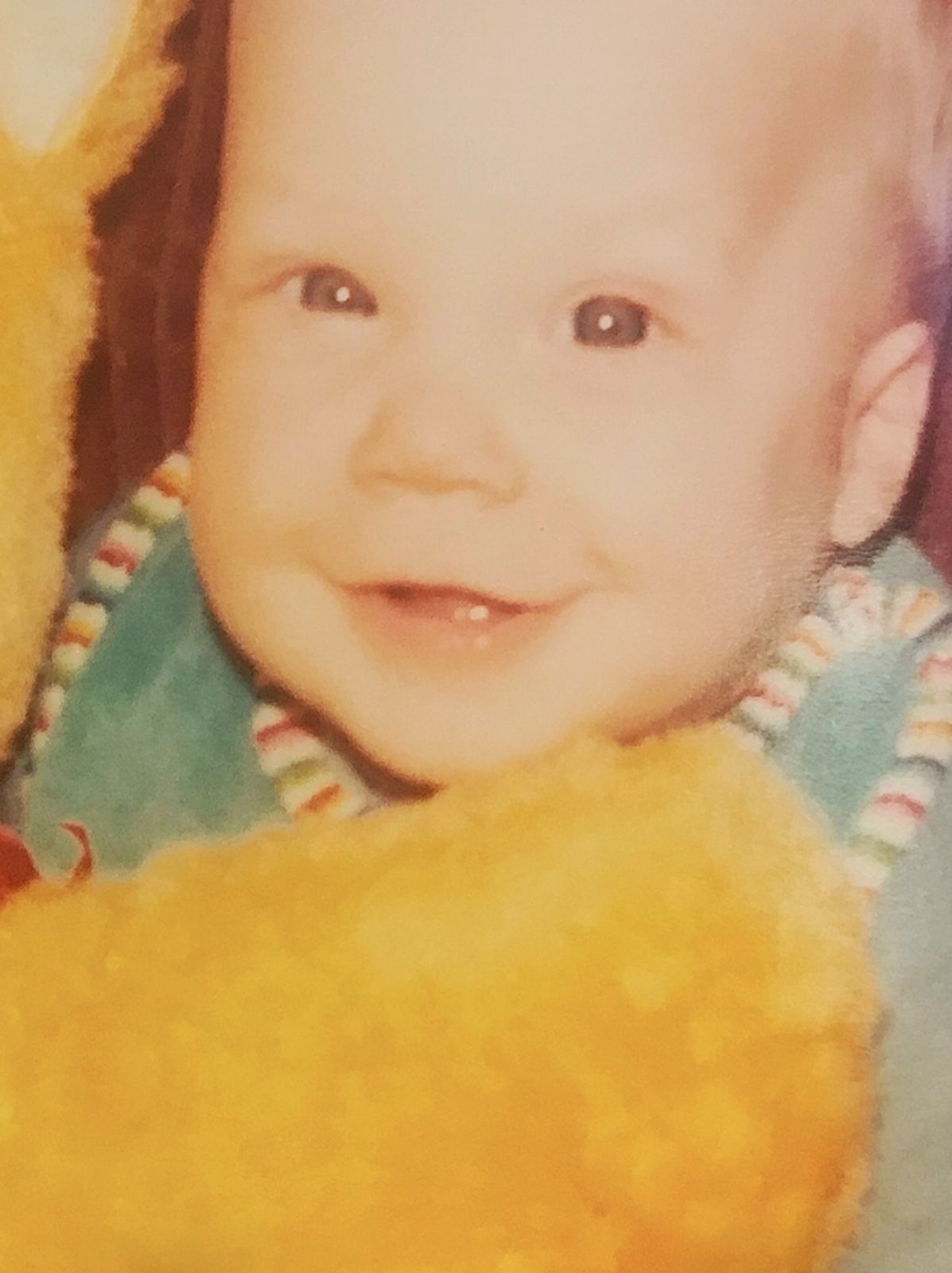
On my phone there is a baby with a yellow bear.
Almost everyone who sees it asks: "Are those your kids?"
No. That's me.
I didn't choose this picture as my background out of nostalgia. It reminds me of a deal I made with myself a few years ago. That is what this part is about.
Two children within us
This series tells my journey in three sentences: Life happens to me. Life happens for me. Life happens through me.
The last parts were about the sentences we grow up with, and about how I learned to be someone. This part is about what lies underneath. It is about two children who live in most of us.
The first is the good child.
It learned early what the adults expected. Be good. Don't disturb. Perform. Don't cause trouble. Fulfil the parents' unfulfilled wishes, the expectations of the environment, the rules of the culture.
The good child is clever. It got us through childhood, school, training, career. It earned us recognition and belonging.
The second is the curious child.
The one that marvels. That asks. That does something because it feels alive, not because it is expected.
In most adults, the good child has become very loud. And the curious child very quiet.
How to tell the good child is running your life
- You say yes before you have even checked whether you want to.
- A no feels as if you were betraying someone.
- You apologise for things that need no apology.
- Criticism hits you deeper than it was meant.
- You know exactly what others need from you, but not what you need yourself.
This is not a flaw. It is a strategy that once made sense. Whoever learned as a child that love is tied to good behaviour carries on like that as an adult. Only today the strategy costs more than it brings.
What the nervous system has to do with it
Pleasing everyone is work for the body.
The nervous system is constantly on alert. Is someone annoyed? Have I given enough? Am I allowed to say that now?
This vigilance used to be protection. Today it keeps us in a state where there is hardly any room for curiosity. Because curiosity needs safety. Whoever is constantly checking inside whether they are still liked has no capacity left for wonder.
The good child makes sure we belong. The curious child makes sure we stay alive.
We need both. But not in this ratio.
My deal with the little boy
A few years ago I made a deal with myself.
Since then, I first weigh every decision with my inner child. With the boy in the photo.
If we agree, we do it.
If we don't agree, I follow him. My inner voice.
And so that I don't forget, he is on my phone. On the thing I probably pick up most often. With every message, every appointment, every impulse, he looks at me.
He reminds me to whom I actually owe something in this life.
Only to him. That he goes through life the way he looks in this photo. And that he stays curious.
What changes as a result
That may sound playful. In practice it is a pretty clear test.
The good child asks: What is expected of me? What is safe? What do the others like?
The curious child asks: Does this feel alive?
As adults we learn to decide out of duty. Out of fear. Out of the need to get it right. This question brings another voice to the table.
Not every decision becomes easier. But many become more honest.
Quick exercise: the photo
- Find a childhood photo of yourself, one in which you look the way you would like to feel again.
- Put it for a week where you see it often: on your phone, on your screen, in your diary.
- At the next decision, big or small, look at it briefly and ask: Would this child say yes?
- Notice what your body answers before your head starts arguing.
The end of the first act
With this part, the first sentence of my journey comes to an end: life happens to me.
The mask. The silent bankruptcy. The old sentences. Learning to be someone. The good child. All of this belongs to a life that happens as long as we don't take it into our own hands.
In the next part I tell how the good child shaped my entire working life. After that the second act begins, with a day on which I made a decision that didn't come from my head.
Your nervous system in focus
The good child often shows up as physical restlessness. In addition to the exercise above:
- Notice the yes-reflex. A quick yes, combined with tightness in your stomach or a smile that feels forced.
- Breathe before you answer. One long exhale gives you the second the curious child needs to have its say.
- Pay attention to the feeling afterwards. Light and open, or heavy and tight? Your body shows you which child just decided.
A break with VYRA
Would you like to experience for yourself what a break with light and sound feels like? Book a personal session or enquire about the VYRA Reset Lounge for your company.

Co-Founder VYRA · Human State & MIND
Mike Fuhrmann is co-founder of VYRA Wellness and a Human State Architect. He has personally guided more than 3,500 sessions and speaks internationally about overstimulation and the art of switching off.
New insights by email
New articles and routines from the VYRA editorial team, at a calm pace.