
Relapses: when we put on other people's masks again
Why we put on other people's masks again under pressure, and how to recognise the loop earlier.
Mike FuhrmannNovember 20264 min read
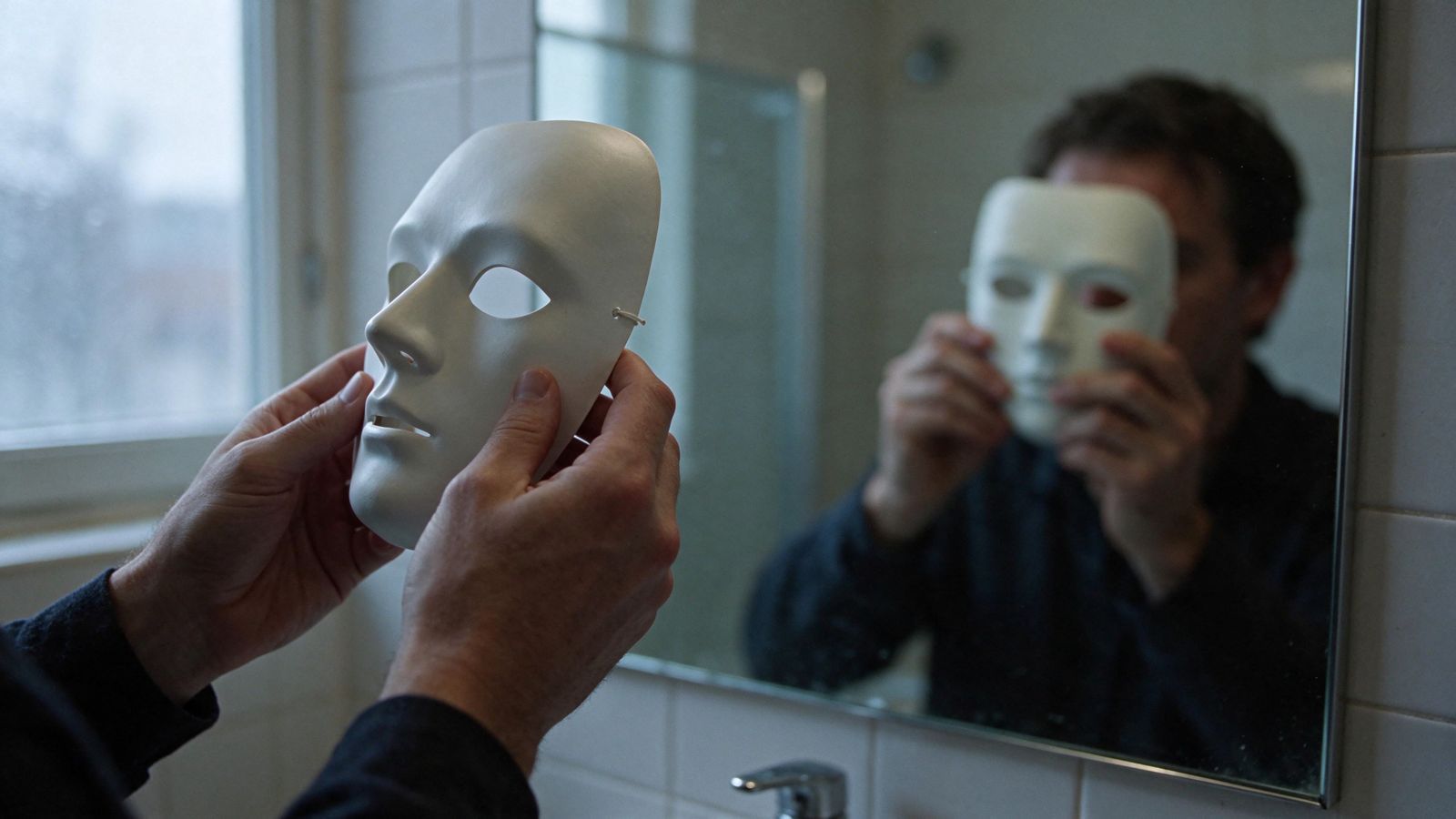
I would love to tell this story like this: I quit, reinvented myself, and since then I have been living my real life.
That would be nice. But it wouldn't be true.
On the way to VYRA I put masks back on more than once. Not my old corporate ones. New ones that others held out to me. And I put them on gratefully.
When fear takes over
After I left, I had an idea I believed in with all my heart: Eternal Echo. Cemeteries were to become museums of inspiration, places where people's stories live on.
I still believe in this idea today. But the bookings didn't come.
And something came up in me that I thought I had long left behind: panic. The feeling that I was going to fail. That the voices had been right that said you don't just leave a secure job.
The missing piece of the puzzle
In that state, an offer came. A company told me I was "the missing piece of the puzzle". Exactly the person they had needed.
That sentence grabbed me. Not because the project suited me so well, but because it touched an old longing: to be needed. To be important.
I put all my energy into it for half a year. I was never paid for it.
The year after, I did marketing consulting for companies that weren't really ready for change. I sensed that quickly and distanced myself again. But the pattern was the same.
The loop
When I looked back, I recognised a loop that always ran the same way:
- I deliver. With full commitment, more than was asked.
- I get frustrated. Because the people who make the decisions don't find the courage the matter would need.
- In the end I'm the one who loses. Exhausted, disappointed, and with the feeling of having betrayed myself again.
The bitter part: it was exactly the mask I had worn in the corporation. The one who delivers. The one who is needed. The one who adapts so that others are happy. I had only changed the stage.
You can leave a role and still take it with you.
Why relapses happen
I was ashamed of this for a long time. Today I see it more gently.
Under pressure, our nervous system falls back on what it knows. Not on what is good for us, but on what used to work. When existential fear is there, the body says: do what made you safe back then. And for me that was: perform, please, be needed.
That is not a character flaw. It is a protective programme that kicks in in a threatening situation.
C. G. Jung describes development not as a straight line but as a spiral. We pass old themes again, but each time at a different height. A relapse doesn't mean you are back at the start. It means you get to look at the theme once more, this time with more awareness.
How I notice earlier today that I'm slipping back into the role
- A sentence hits me too hard. When a compliment like "you're exactly the right person" calms me more than it pleases me, I become careful.
- I say yes before I have felt it. A quick yes out of fear feels different in the body than a yes out of conviction.
- I work against my own rhythm. Less sleep, more coffee, no breaks. My body often notices the mask before my head does.
- I wait for others to be brave. When my happiness depends on other people's decisions, I have given my power away again.
> Important: If setbacks pile up and you have been feeling exhausted, hopeless or worthless for weeks, if you are barely sleeping or have thoughts of not wanting to live anymore, please talk to your doctor or a professional. In Switzerland you can reach Die Dargebotene Hand around the clock on 143.
Your nervous system in focus
Relapses often begin in the body long before we notice them. You can learn to feel them earlier:
- Pause briefly before every yes. Three breaths before you agree. Do you feel openness or tightness?
- Notice the pressure. A fast pulse, tense shoulders, the feeling of having to react immediately: these are signs that your alarm system is deciding, not you.
- Lengthen your exhale. When existential fear comes up, a long, calm exhale helps you think more clearly again.
- Be kind to yourself. Shame keeps the nervous system on alarm. A relapse you recognise is already a step further.
A break with VYRA
Would you like to experience for yourself what a break with light and sound feels like? Book a personal session or enquire about the VYRA Reset Lounge for your company.
Co-Founder VYRA · Human State & MIND
Mike Fuhrmann is co-founder of VYRA Wellness and a Human State Architect. He has personally guided more than 3,500 sessions and speaks internationally about overstimulation and the art of switching off.
New insights by email
New articles and routines from the VYRA editorial team, at a calm pace.