
The golden shadow: why we fear our light more than our darkness
Almost 100,000 Swiss francs, self-doubt and the question of why we often fear our light more than our darkness.
Mike FuhrmannNovember 20264 min read

After I left, I had money in my account, experience behind me and ideas in my head. Actually everything you need to build something of your own.
What I lacked was something else. I didn't trust myself to simply start.
How I kept myself small
Instead of investing in myself, I invested in others. In stakes that sounded like quick returns. In crypto projects I would describe as dubious today. I trusted that others knew what was right, and lost almost 100,000 Swiss francs in the process. Money I had earned during my time in the corporation.
The financial loss was painful. But in hindsight something else was even more revealing: I was willing to believe strangers. I wasn't willing to believe myself.
Then came the self-doubt. The thoughts about whether I shouldn't go back into a corporation after all. Back into the security I had only just left.
And my parents asked me how I could stay so calm in the face of unpaid bills. A loving question, out of genuine concern. And still it woke up the old sentence in me: the little man can't achieve anything.
What Jung calls the golden shadow
When we think of the shadow, we think of the dark in us. Anger, envy, shame. What we don't want to see in ourselves.
C. G. Jung pointed out that something else lies in the shadow too. Abilities, strength, creativity that we split off early because they didn't fit the picture. Because they were too loud, too big, too risky. Later authors coined the term golden shadow for this.
The deceptive part: we often recognise the golden shadow in others first. We admire people for exactly what lies dormant in ourselves. And we give them our trust, our money, our hope, instead of looking for it in ourselves.
Sometimes it isn't our weaknesses we fear most. It is what would be possible if we trusted our strengths.
Why visibility feels dangerous
Making yourself small has a function. Whoever stays small doesn't stand out. Whoever doesn't stand out isn't criticised, rejected or excluded.
For our nervous system, that is a sensible strategy. Whoever learned as a child that too much of their own self brings rejection often feels alarm as an adult when becoming visible: a pounding heart before going on stage, the urge to water down an idea once more, the impulse to send someone else ahead.
Self-sabotage is therefore rarely laziness or stupidity. Often it is a protection that has been in use for too long.
What kintsugi has to do with it
In Japan there is an art called kintsugi. Broken ceramics are repaired with gold. The cracks are not hidden but emphasised.
I like this image because it shows me both: the losses, the wrong decisions, the doubts are part of my story. And exactly at these places lies something today that I can pass on.
The calm my parents wondered about may not have been recklessness. Maybe it was the first sign of trust. In myself.
Questions that helped me
- Whom do you particularly admire right now, and for what? Admiration often points to something in yourself that wants room.
- Where do you give your power away? To experts, to promises, to people who seem to know better.
- What would you do if you trusted yourself as much as you trust others?
Your nervous system in focus
Becoming visible needs safety in the body. You can practise it:
- Notice the shrinking. Hunched shoulders, a quiet voice, the impulse to apologise. Often the body shows the withdrawal before we think it.
- Straighten up. Feet on the floor, spine long, gaze forward. An upright posture alone solves nothing, but it gives your nervous system a different signal.
- Exhale before becoming visible. Before a talk, a pitch, an important message: exhale slowly, pause briefly, only then speak.
- Stay with the good feeling. When someone praises you, stay with it for one breath longer instead of waving it away immediately.
A break with VYRA
Would you like to experience for yourself what a break with light and sound feels like? Book a personal session or enquire about the VYRA Reset Lounge for your company.
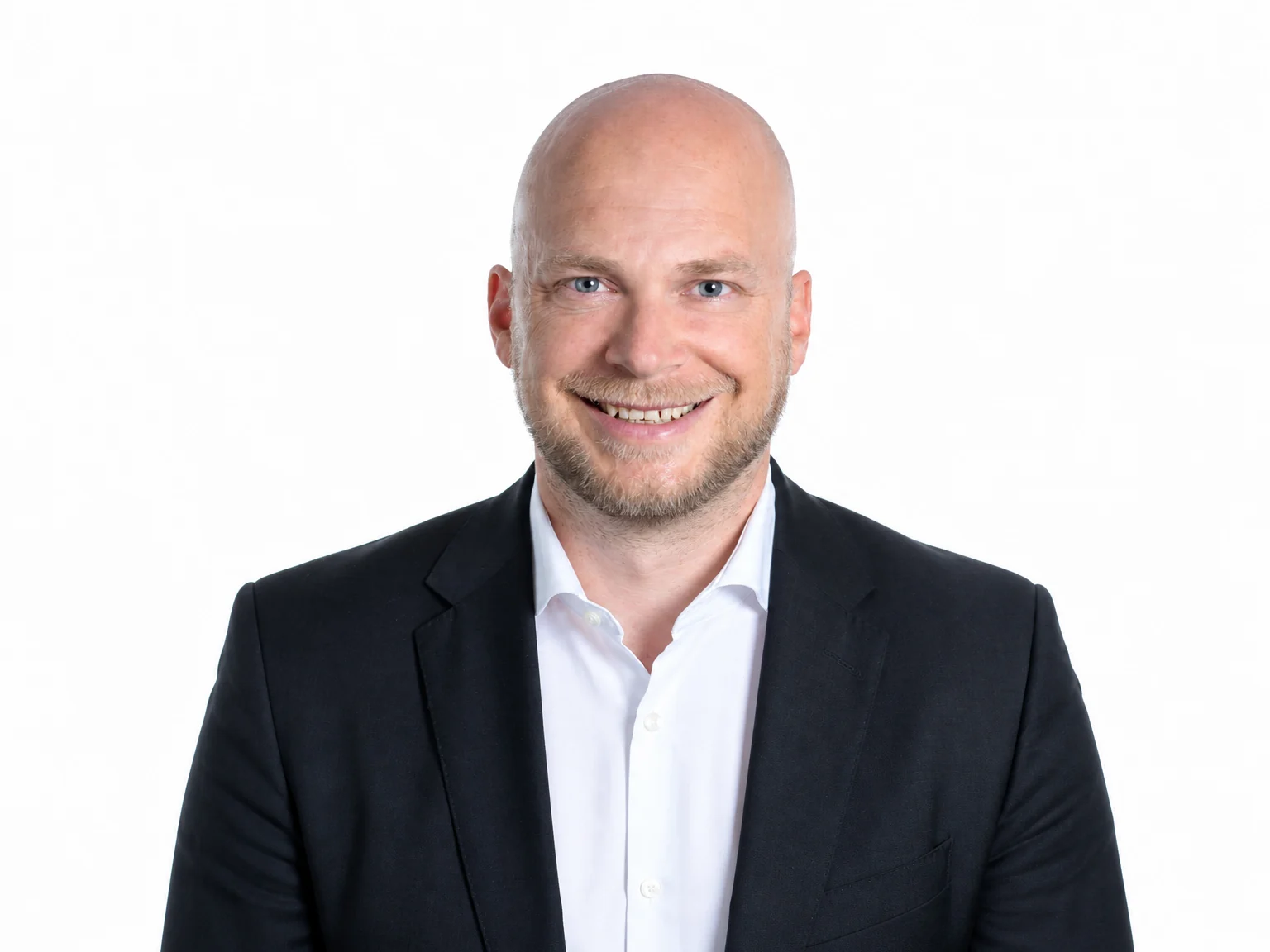
Co-Founder VYRA · Human State & MIND
Mike Fuhrmann is co-founder of VYRA Wellness and a Human State Architect. He has personally guided more than 3,500 sessions and speaks internationally about overstimulation and the art of switching off.
New insights by email
New articles and routines from the VYRA editorial team, at a calm pace.