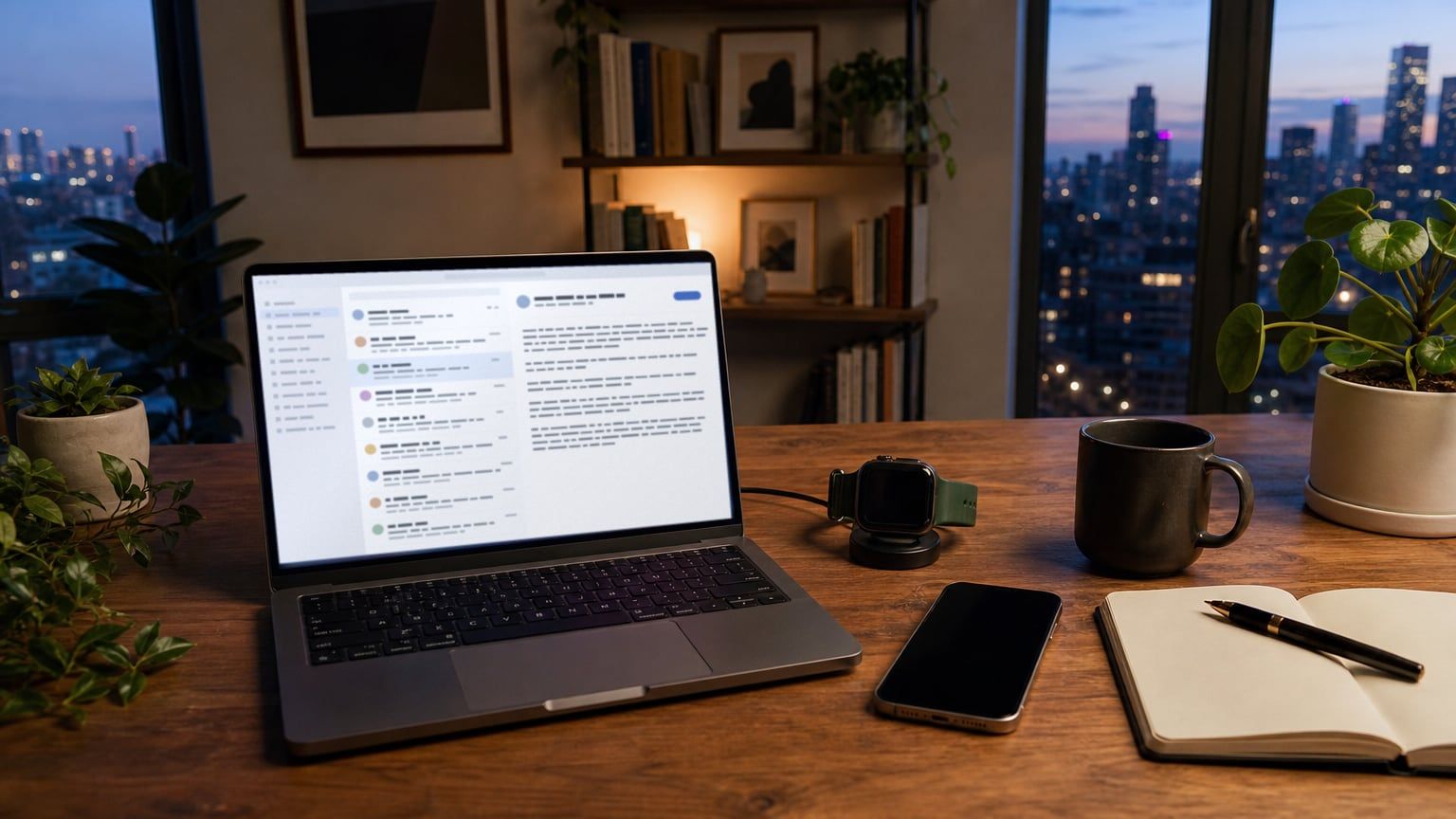
3 am, wide awake: What your nervous system is trying to tell you
Dead tired and yet wide awake? Why you wake up at night, what your nervous system has to do with it and how you can shape your evening differently.
Mike FuhrmannNovember 20265 min read
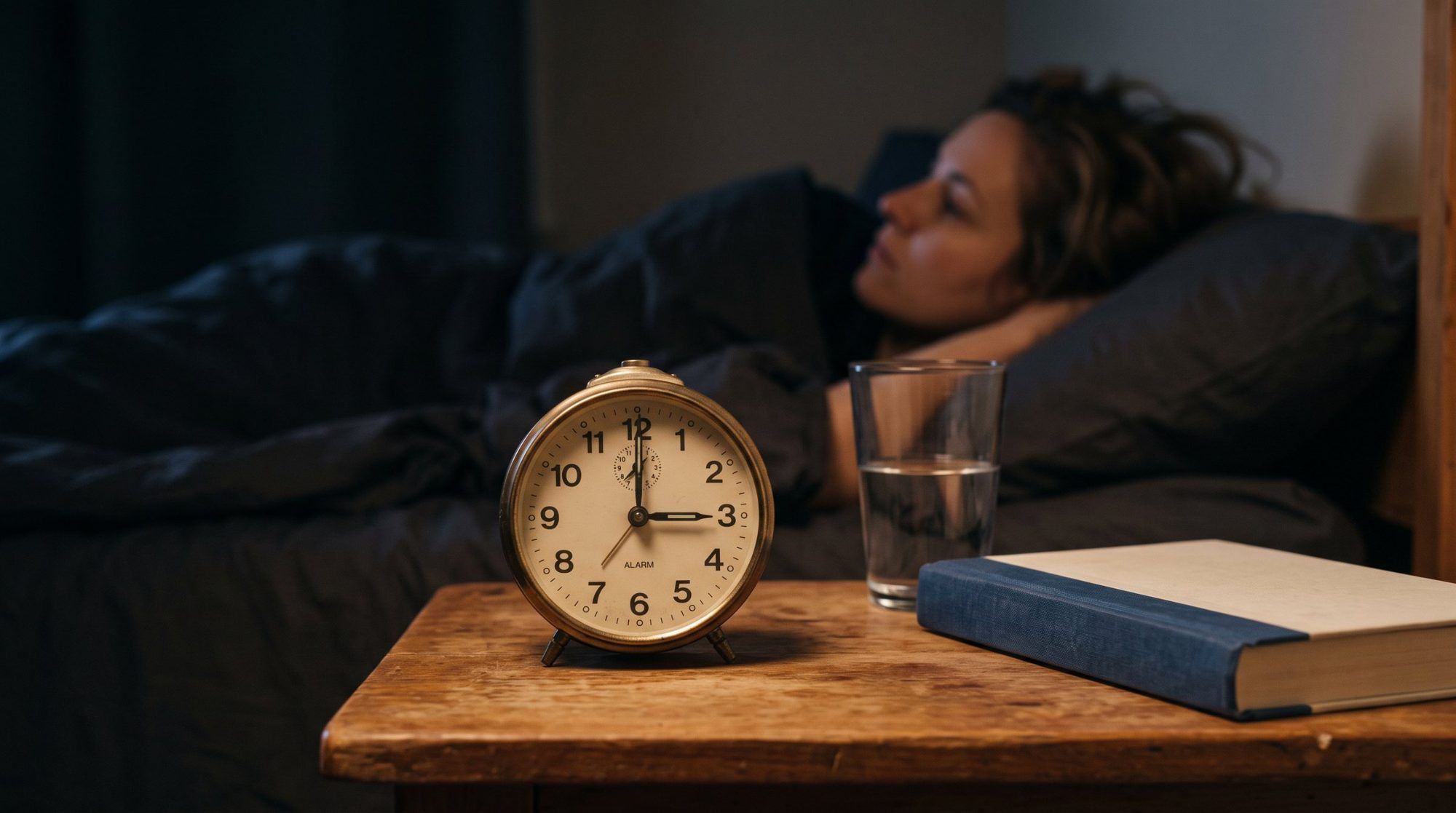
You open your eyes. It is dark. A glance at the alarm clock: 3:12 am.
Again.
You were dead tired when you went to bed. And now you are wide awake. Your mind starts running as if someone had flipped a switch: yesterday's conversation, the email that is still open, the presentation in the morning.
You know you should be sleeping. And that very thought keeps you awake.
If you know this, you are not alone. In Switzerland, around a third of the population say they sleep poorly, women more often than men. Among young women, the share with severe sleep problems has almost tripled since 1997 (Swiss Federal Statistical Office, Swiss Health Survey 2022).
I know these nights. There was a time when I was exhausted and wired at the same time. Tired, but without sleep.
Today I know: sleep is not a switch. Sleep is a state.
Exhausted and overactivated at the same time
How can you be so tired and still not sleep?
The answer lies in the nervous system. It constantly checks whether you are safe or in danger, at night too. Falling asleep and staying asleep are only possible when your body gets the signal: you can let go, it is safe.
After a day full of appointments, messages and pressure, that signal is often missing. Your body is exhausted, but your system is still under tension. Stress hormones, thoughts, unfinished business: everything says «stay alert».
That is not a fault. It is a protective programme.
Your nervous system does not want to torment you. It wants to protect you. It just does not know that the «danger» is a full inbox and not a predator.
You are not sleeping badly because you are doing something wrong. You are sleeping badly because your system is not allowed to switch off.
Why you cannot force sleep
The paradox of sleep: the more you want it, the further away it moves.
Anyone who looks at the clock at three in the morning and calculates how many hours are left puts their system under even more pressure. The thought «I have to sleep now» is just another task for the body. Another signal for alarm.
Sleep cannot be forced. It can only be invited.
And the invitation does not begin in bed, but hours earlier: with the question of what state you go into the evening in.
The evening is a transition, not a standstill
Many of us work until shortly before bedtime. Quickly check emails, quickly read the news, watch one more episode. Then lights out, expecting the body to wind down immediately.
That is not how a nervous system works. It needs a transition: from doing to being, from activation to calm, from the world outside back to yourself.
Try it now 1: The last hour is yours. Put your phone away an hour before bed, ideally outside the bedroom. The bright screen light and the stream of messages keep your system awake.
Try it now 2: Dim the lights. In the evening, switch off bright ceiling lights and use warm, dimmed light. Light is one of the strongest signals for your brain as to whether it is day or night.
Try it now 3: A fixed ritual. A cup of tea, a few pages of a book, a particular scent. If you do the same thing every evening, your body learns: the day is over now.
What you can do at 3 am
And if you still wake up?
Then it is not about getting sleep back. It is about signalling safety to your nervous system.
Try it now 4: Breathe out longer than you breathe in. Breathe in for four seconds and out for six to eight seconds. Repeat this five to ten times. The longer exhale is a simple signal for the body to wind down.
Try it now 5: Do not look at the clock. Turn the alarm clock around. The time does not help you fall asleep, it only adds pressure.
Try it now 6: Park your thoughts. Put a pen and paper next to your bed. Write down what is going through your mind. Do not solve it, just set it down. Tomorrow is another day.
The room you sleep in
We talk a lot about sleep habits and little about the room we sleep in. Yet it constantly shapes how safe your body feels: light, noise, screens, clutter, devices.
At VYRA we see the room as part of the whole. That is why we think in three areas: Mind, Body and Space.
For the mind, we offer a wearable that invites you to take a break with light and sound. Many people use it to consciously take a few minutes for themselves, without having to «meditate properly».
For the room, we offer devices with which we want to shape your surroundings more consciously. Try out what does you good and see for yourself.
The question for tonight
Perhaps the most important question is not: «How do I sleep better?»
But: «What state am I going to bed in tonight?»
Because good sleep does not begin when you switch off the light. It begins when your nervous system senses that it may let go.
Frequently asked questions
Why do I wake up at 3 am wide awake?
Many people are exhausted and over-activated at the same time in the evening. The body is tired, but the nervous system stays switched on. Then a small trigger is enough, and the mind is back in the middle of the night.
What can I do when I lie awake at night?
It is not about getting sleep back but about signalling safety to your nervous system: breathe out for longer than you breathe in, do not look at the clock and park your thoughts on paper next to your bed. A calm room helps: little light, little noise, no screen next to the bed.
How can I shape my evening differently?
See the evening as a transition, not a standstill: close the working day deliberately, turn down lights and screens earlier and give your body time to move from day to evening. If problems with sleep last for weeks, please see a doctor.
Your next step with VYRA
Would you like to experience for yourself what a break with light and sound feels like? Book a personal session or enquire about the VYRA Reset Lounge for your company.
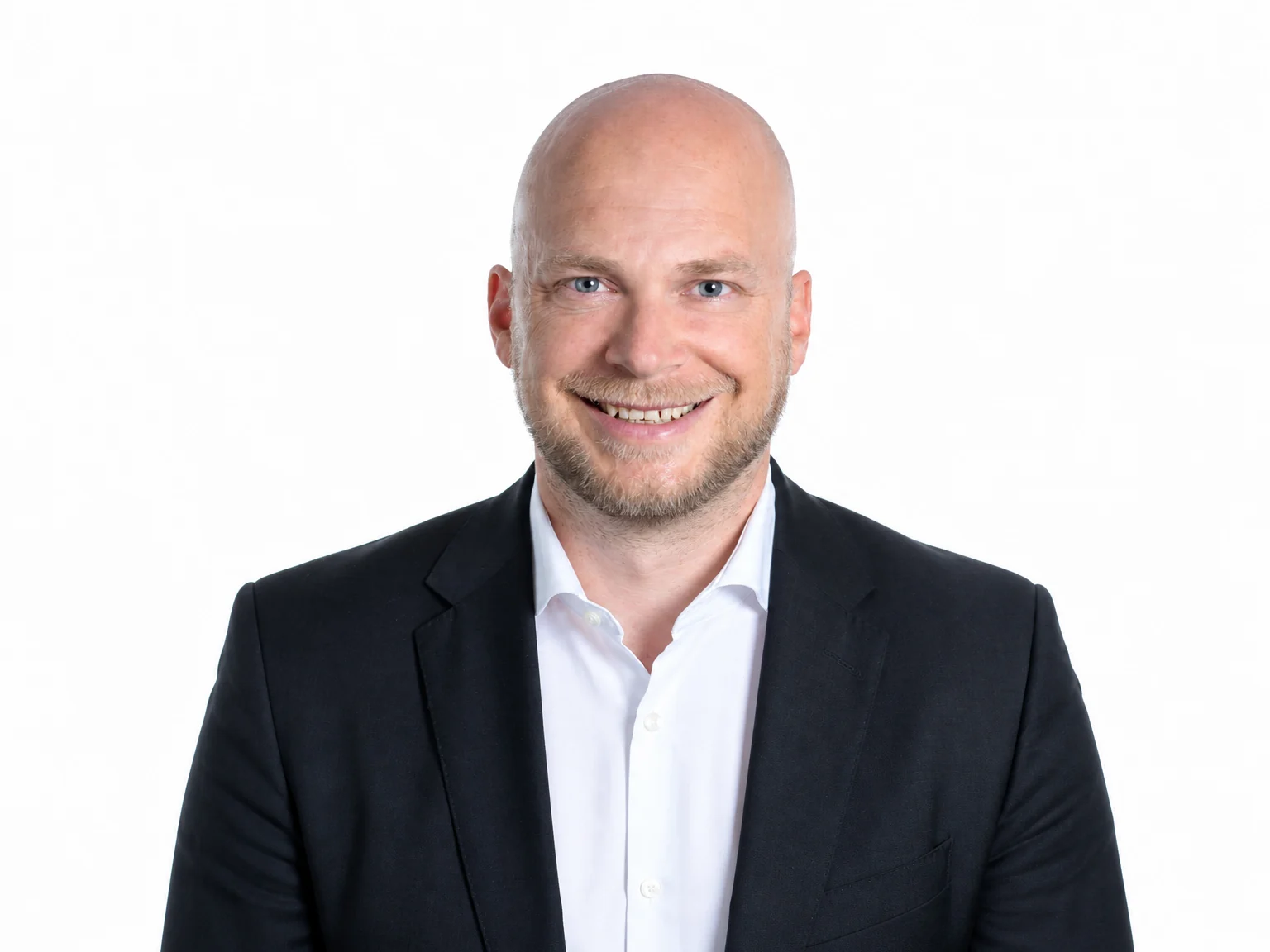
Co-Founder VYRA · Human State & MIND
Mike Fuhrmann is co-founder of VYRA Wellness and a Human State Architect. He has personally guided more than 3,500 sessions and speaks internationally about overstimulation and the art of switching off.
Sources
New insights by email
New articles and routines from the VYRA editorial team, at a calm pace.