Why wellbeing programmes often fall short and what employee health really needs
Apps, courses, resilience training and exhaustion is still rising? What an Oxford study shows and what employee health really needs.
Mike FuhrmannNovember 20265 min read
Companies are investing more in employee health today than ever before. Mindfulness courses. Resilience training. Wellbeing apps. Relaxation sessions at lunchtime.
And yet exhaustion is rising.
In Switzerland, around one in three working people is emotionally exhausted, 30.3 per cent, the highest figure since measurements began in 2014. 28.2 per cent are in the critical range: their demands exceed their resources. The Job Stress Index estimates the potential lost to the economy as a result at around 6.5 billion francs a year.
When so much is being invested and things are still getting worse, an uncomfortable question is worth asking:
Are our programmes actually working?
What a study of 46,336 employees shows
Oxford researcher William Fleming investigated exactly that. His study, published in the Industrial Relations Journal in 2024, analyses data from 46,336 employees in 233 organisations in the United Kingdom.
The result is sobering: for individual wellbeing offerings such as mindfulness courses, resilience and stress management training, relaxation classes or wellbeing apps, he found no measurable effect. On several measures of wellbeing, participants were no better off than colleagues who had not taken part.
Fleming does not conclude from this that health at work does not matter. Quite the opposite. He points to what is missing in many programmes: the organisation itself. Job design, leadership, resources, the way performance is assessed.
You cannot repair in the evening what the working day breaks all day long.
The problem with the «add-on»
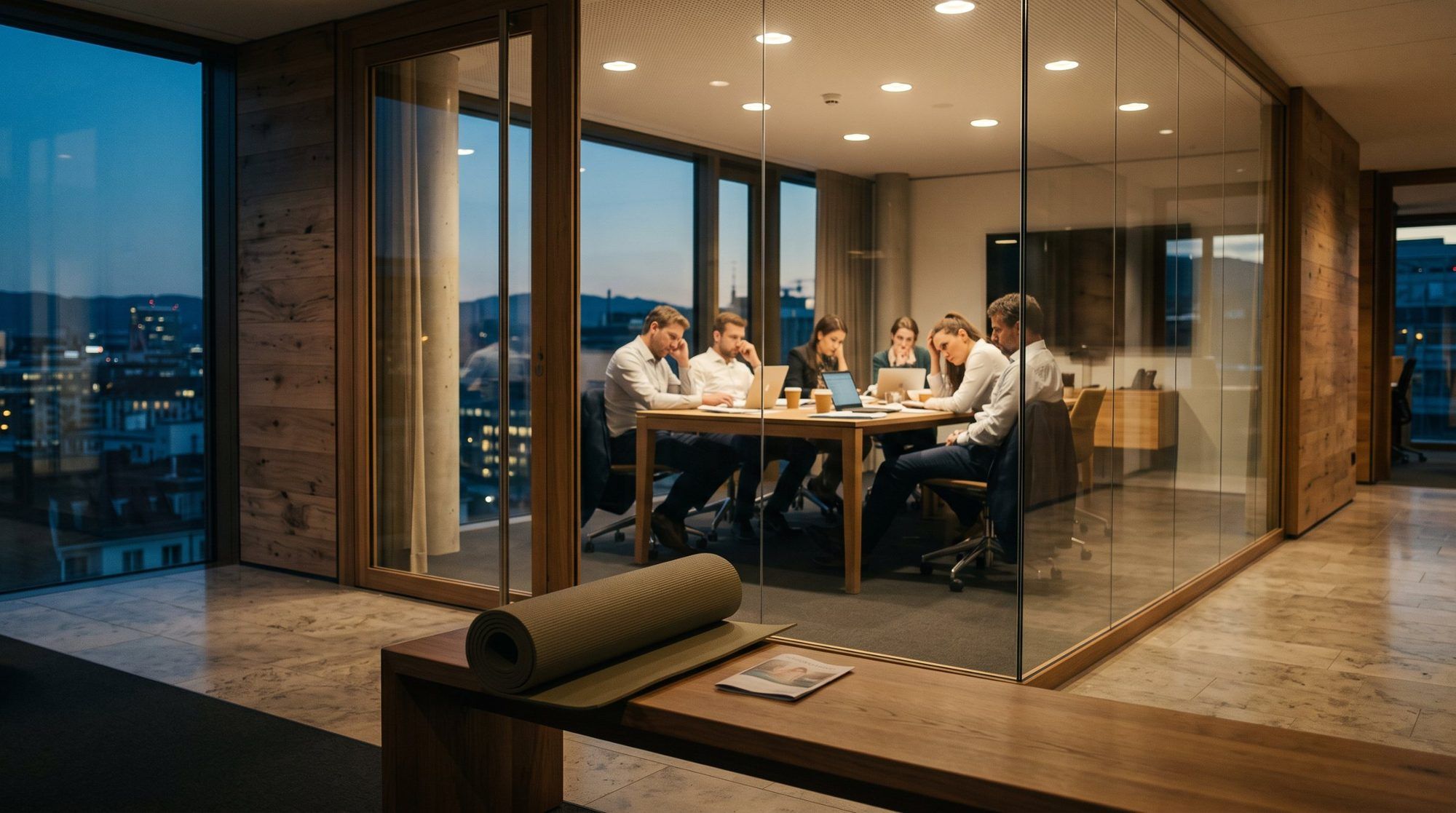
Many programmes share a common pattern: they take place outside the actual working day. After work. During the lunch break. In an app you are supposed to open when you have time.
This turns health into an extra task. Something you still have to get done when your calendar is already full.
And the very people who need it most use it least. Not because they do not want to. But because their nervous system is running on constant alarm and simply has no capacity left for «one more thing».
I know this perspective from both sides. When I was on the executive board of Generali Switzerland, I experienced pressure from the inside. From the outside my life looked successful. On the inside I was exhausted and empty. Another offering would not have changed that.
I did not need a new method.
I needed to find access to myself again.
Every decision has a state
For companies, this is not only a health question. It is a question of performance and the quality of decisions.
Every strategy, every negotiation, every client meeting passes through a human nervous system before it goes out into the world.
Every decision has a state behind it.
Under constant stress, uncertainty feels like danger and disagreement like an attack. Speed becomes more important than wisdom, control more attractive than trust. People do not become less intelligent, but their intelligence serves survival instead of collaboration.
For a leader, that can change a conversation. For a team, the culture. For a company, the future.
The ability to change your own state is therefore not just another wellness trend.
It is human infrastructure.
What employee health really needs
From the research and from our work with companies, clinics and events, four approaches emerge that go beyond conventional offerings:
1. Start with the organisation. Workload, meeting culture, availability, leadership style. If the cause lies here, no course can make up for it.
2. Bring moments of calm into the working day. Not after work, but where the pressure arises: between two meetings, before an important decision, after a difficult conversation.
3. Leadership as a role model. When leaders visibly take breaks and talk about their state, it becomes normal for everyone else.
4. Experienced, not explained. People do not need anyone to tell them how they should feel. They need opportunities to experience for themselves what helps them.
Try it now with your leadership team: Start the next meeting with 60 seconds of silence and one question for everyone: what state am I in right now, and what state does this meeting need? Do not discuss, just name it briefly.
Reset moments instead of an add-on programme
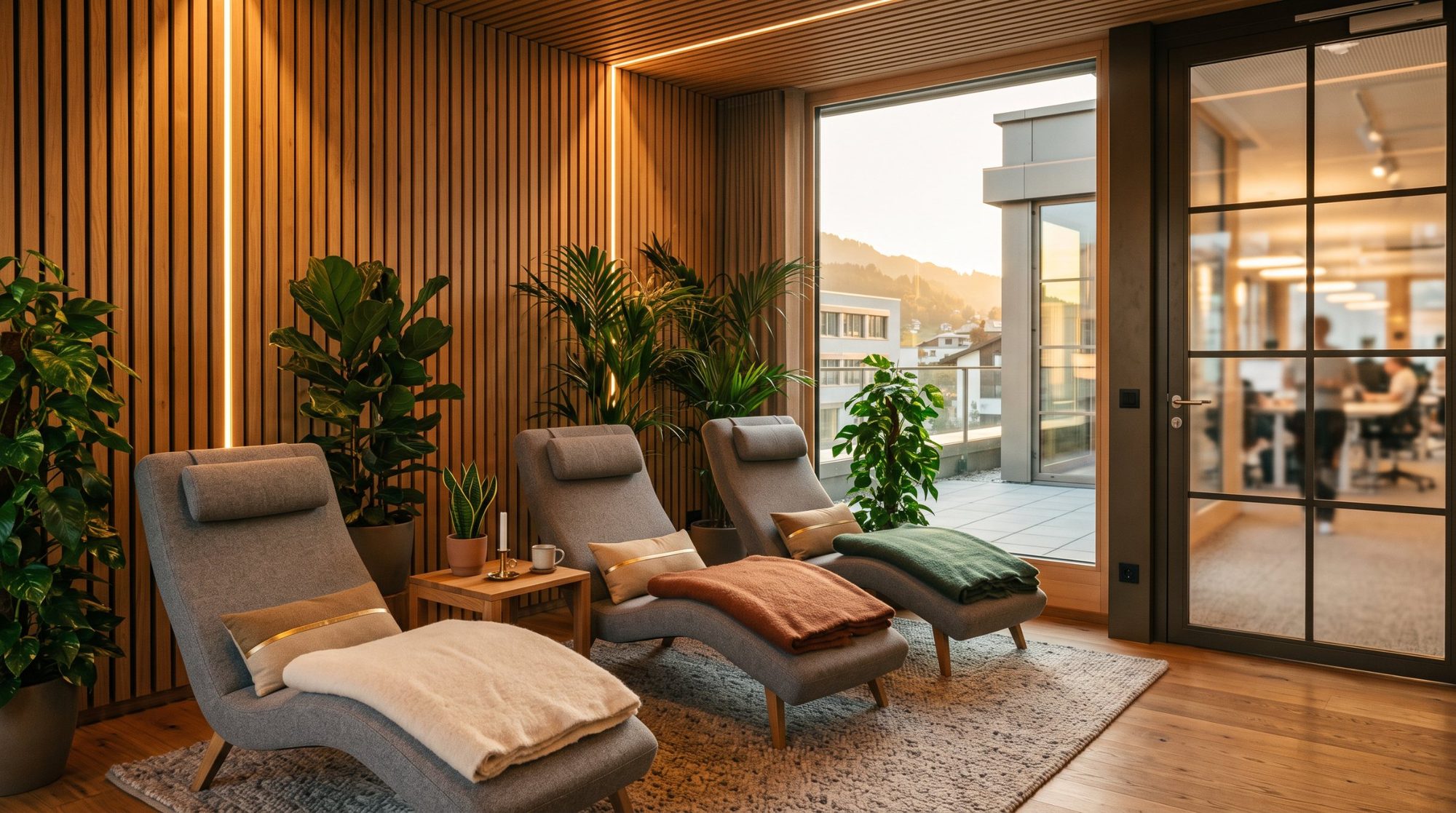
This is exactly where the VYRA Reset Lounge comes in. A space where employees can take a 10 to 15 minute break and switch off. No preparation, no changing clothes. Sit down, experience light and sound, let go.
We have brought the concept to side events during the World Economic Forum, to the Longevity Investors Conference in Gstaad and to TEDx events of different sizes and formats. The feedback from organisers was remarkably consistent: the reset zone became one of the highlights, a place where people found a real break in the middle of the event bustle before going back into the conversations that mattered.
A Reset Lounge does not solve structural problems. It replaces neither good leadership nor a reasonable workload. But it can be a visible sign: here, the state of people is allowed to matter. In the middle of the working day.
We protect buildings, data and assets. Who protects the state from which our most important decisions arise?
Frequently asked questions
Why do wellbeing programmes often fall short?
Many programmes are an extra after hours: an app, a course, a training. They start with the people, not with the working day that creates the pressure. It is hard to balance out in the evening what the day has used up all day long.
What does employee health really need?
The article names four approaches: start with the organisation (workload, meeting culture, availability, leadership style), bring moments of calm into the working day, leadership as a role model, and experienced rather than explained. Employee health is human infrastructure, not an add-on.
What are reset moments in a company?
Reset moments are short breaks where the pressure arises, such as 10 to 15 minutes in a dedicated room like the VYRA Reset Lounge, with no preparation and no changing. A Reset Lounge does not replace good leadership or a reasonable workload, but it can be a visible sign that people's state matters.
Your next step with VYRA
Would you like to know what a Reset Lounge could look like in your company? We are happy to show you the concept on site or at an event.
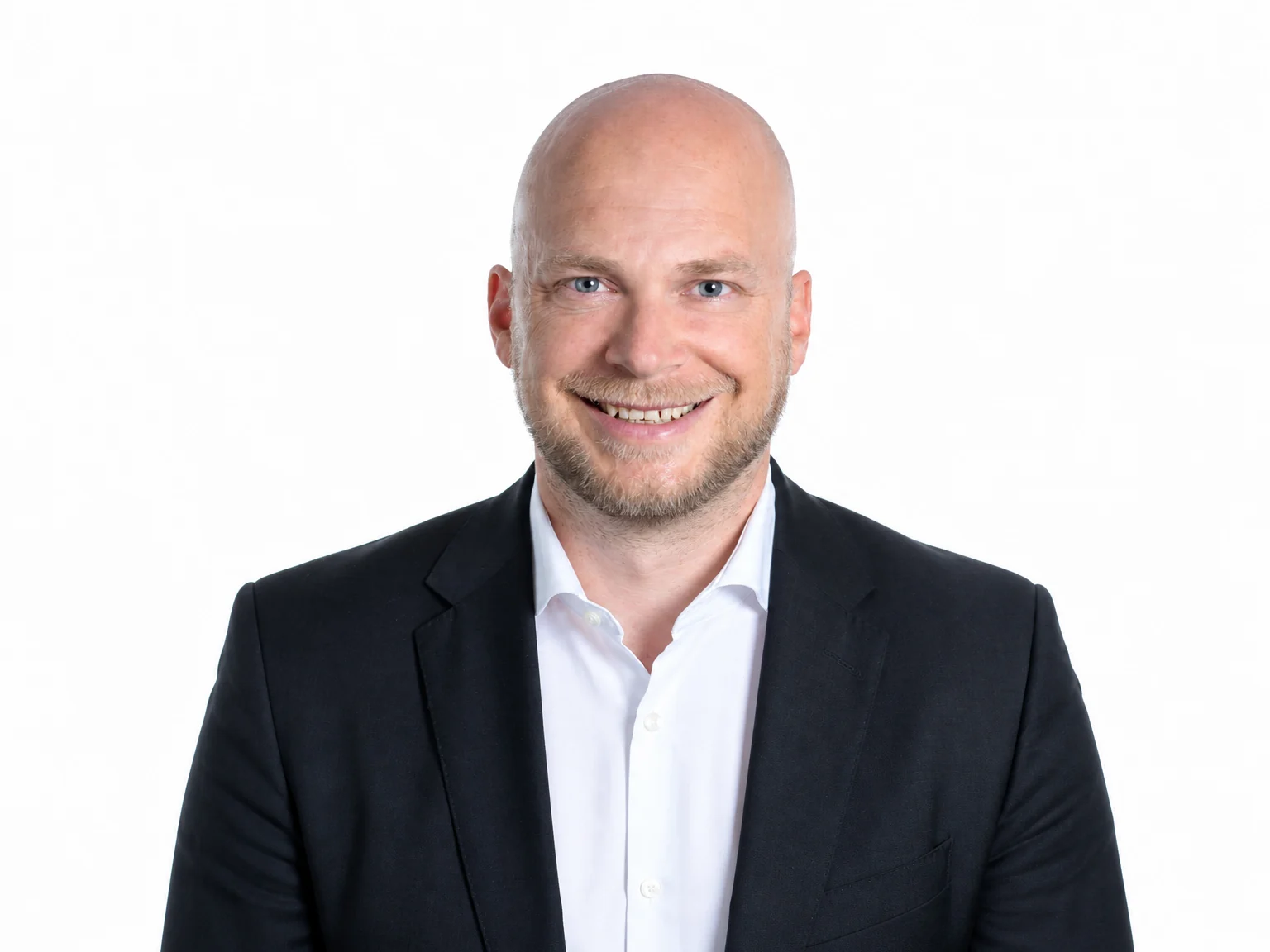
Co-Founder VYRA · Human State & MIND
Mike Fuhrmann is co-founder of VYRA Wellness and a Human State Architect. He has personally guided more than 3,500 sessions and speaks internationally about overstimulation and the art of switching off.
Sources
New insights by email
New articles and routines from the VYRA editorial team, at a calm pace.