
When everything falls away: why crises are often turning points
What happens when invitations, contacts and certainties disappear along with the role, and why crises are often turning points.
Mike FuhrmannNovember 20265 min read
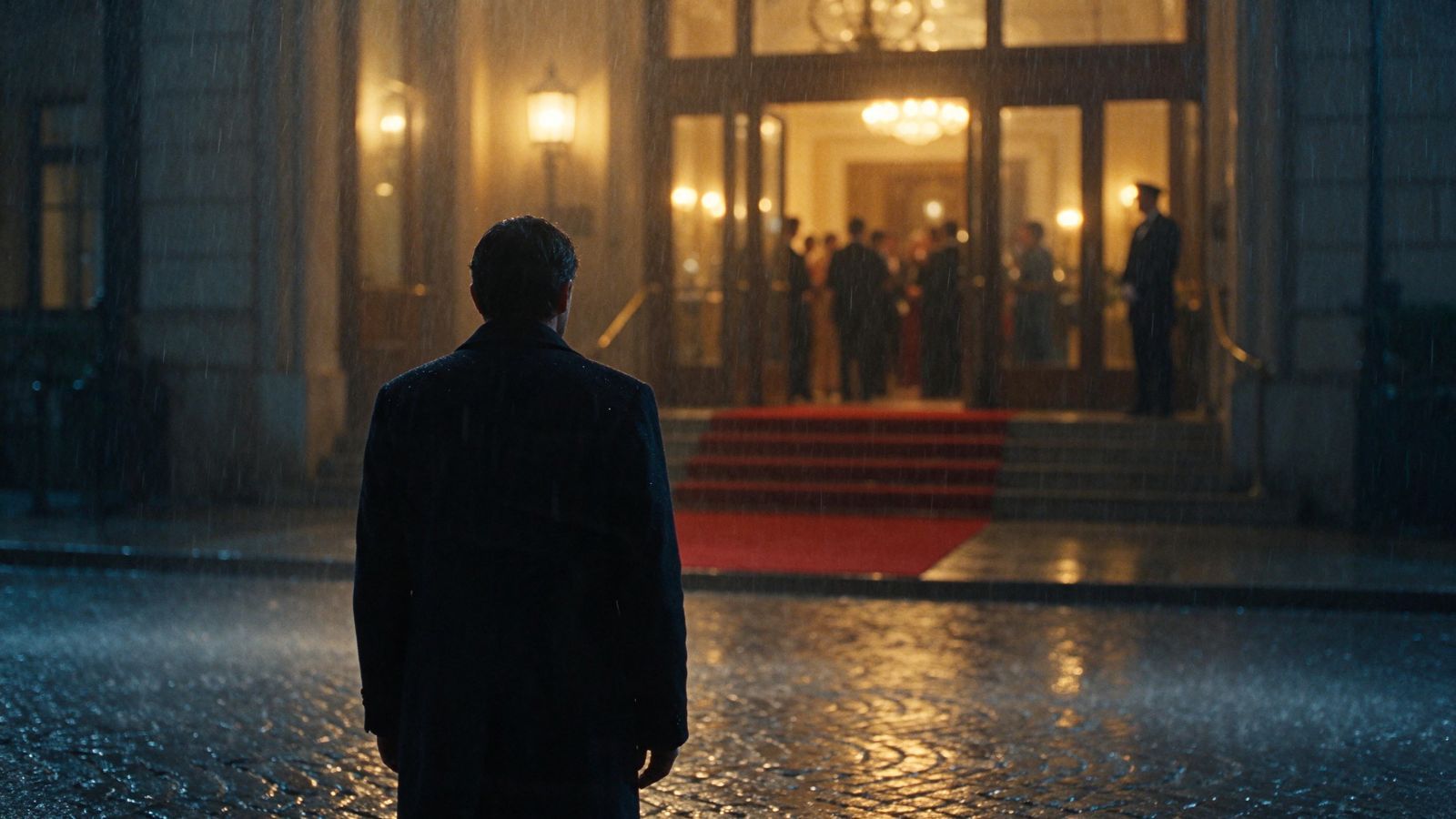
For a long time I believed the people around me liked me. And maybe they did. But after I left, I learned how much of it depended on my role.
It didn't happen dramatically. It happened quietly. And that is exactly what made it so painful.
What fell away
The invitations to galas stopped coming. At a film festival I had supported as a Gold Donor for years, I was no longer even invited to the opening.
People from my team had told me they would follow me wherever I went. They stayed. And at some point I heard that I was now "the bad guy" there.
Many in my circle of friends withdrew. Well-known people from Zurich who used to call as a matter of course no longer got in touch. Colleagues from the executive board forgot my birthday.
And then there are people who are still very dear to me and who still work in the corporate world. They simply stopped getting in touch. I would like to write to them. Maybe I will after this text.
What I learned from it
I'm not telling this to accuse anyone. I don't believe these people are bad. Many relationships develop within a certain frame: in the same office, at the same events, with the same interests. When one person leaves the frame, the common ground disappears.
And honestly: I used to be like that myself sometimes. I maintained contacts as long as they fitted the job.
It still hurts. Because when the outer structures fall away, part of the answer to the question also falls away: who am I, actually?
Losing a role is hard. Even harder is noticing how many people only knew the role.
Life happens for me
In this series I tell my journey in three sentences. Life happens to me: the years in which life happened to me. Life happens for me: the phase in which I learned that what breaks can have meaning. And life happens through me: the transition I am in right now.
The falling away belongs to the middle phase. Back then it didn't feel meaningful. It felt like free fall.
The drawn bow
C. G. Jung used an old Greek word that meant a lot to me during that time: enantiodromia. It describes how something that is pulled too long and too hard in one direction eventually turns into its opposite.
For years I had lived in one direction: performance, status, belonging through the role. The swing back was intense. But perhaps it was also inevitable.
The image of a bow helps me. For an arrow to fly, the string first has to be drawn far back. In the opposite direction. The tension feels like a step backwards. Yet it is the precondition for flight.
I'm not saying every crisis has to have a meaning. Some things are simply hard. But I have experienced that in what falls away, space can open up for something that had no room before.
What happens in the body when everything falls away
For our nervous system, belonging is not a side issue. For thousands of years, being excluded meant danger. That is why the body often reacts to social loss much like a threat. Sleep becomes restless, thoughts circle, you get irritated more quickly or feel numb.
That is not weakness. It is an understandable reaction to a real loss.
> Important: A life crisis can turn into depression. If you have been feeling exhausted, hopeless or cut off for weeks, if you are barely sleeping or have thoughts of not wanting to live anymore, please talk to your doctor or a professional. In Switzerland you can reach Die Dargebotene Hand around the clock on 143.
What helped me
- Naming the losses. Not talking them away, not sugar-coating them. Writing down who and what was missing, and that it hurts.
- Distinguishing between role and person. Those who only knew the role didn't leave me, they left a function.
- Seeing the few who stayed. There were fewer than before. But they were real.
- Letting new people in. The new path brought people who got to know me without a title.
Your nervous system in focus
When familiar structures fall away, your body looks for something to hold on to. You can give it that:
- Notice the alarm signals. A tight chest, shallow breathing, circling thoughts in the evening. Seeing them is the first step to not feeding them.
- Orient yourself in the room. Look around slowly and name five things you see. This brings your nervous system into the here and now.
- Breathe out longer than you breathe in. A few minutes, several times a day. A long exhale is one of the most direct signals of safety.
- Seek contact that regulates. A conversation with someone you don't have to explain anything to often calms more than any exercise.
A break with VYRA
Would you like to experience for yourself what a break with light and sound feels like? Book a personal session or enquire about the VYRA Reset Lounge for your company.

Co-Founder VYRA · Human State & MIND
Mike Fuhrmann is co-founder of VYRA Wellness and a Human State Architect. He has personally guided more than 3,500 sessions and speaks internationally about overstimulation and the art of switching off.
New insights by email
New articles and routines from the VYRA editorial team, at a calm pace.